
Short answer: Inventory planning for a DTC brand that is scaling ads means forecasting units from your planned ad spend, not just last month's sales. Set a reorder point for every core SKU (average daily sales × supplier lead time + safety stock), raise it before budget increases, and connect stock levels to your Meta and Google catalogs so you never pay to send traffic to a sold-out product. Stockouts don't just lose a sale; they reset ad learning, waste spend and drag down blended MER.
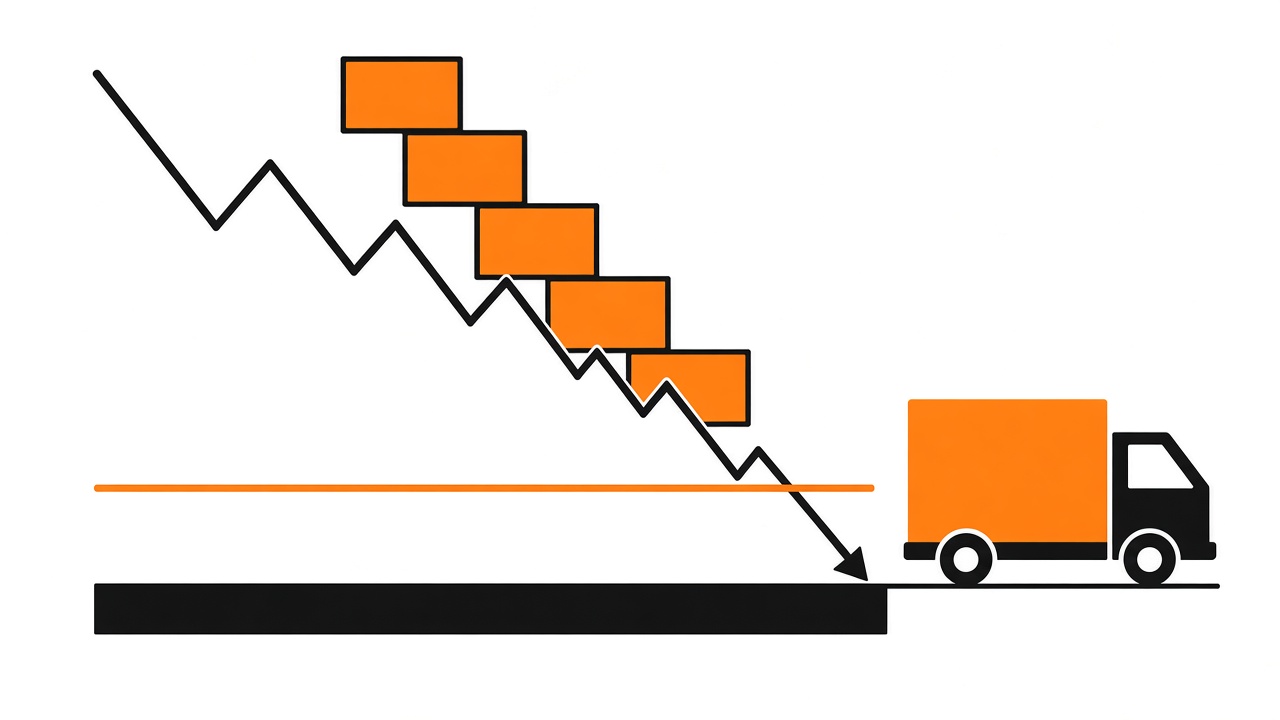
Most DTC brands treat inventory as an operations problem and ads as a marketing problem. Once you start scaling paid media, they become the same problem. Every dollar you add to Meta or Google is a bet that you can ship the extra orders it produces. If the product sells out, three things happen at once:
The opposite mistake hurts too. Ordering far more than you will sell ties up cash you could have spent on creative, testing or more ads. Good inventory planning lets you scale spend with confidence and keeps cash moving.
A forecast based only on last month's sales assumes next month looks the same. If you are actively scaling, it won't. Tie your unit forecast to the spend plan your marketing team is already building.
Here's a simple method that works for most brands under $5M a year:
A skincare brand sells a hero serum at 40 units a day. About 60% of orders come from paid. Next month the plan is to raise ad spend 30%.
That 5-unit-a-day difference sounds small. Over a 30-day supplier lead time it's 150 units, which is often the difference between selling through a peak week and pausing your best ads in the middle of it.
Judge whether a spend increase is worth it with blended MER, not platform ROAS. Our MER vs ROAS guide shows how to set the floor your forecast should respect.
The reorder point is the stock level that tells you to place the next purchase order. Hit it, and you order. The formula:
Reorder point = average daily sales × lead time (days) + safety stock
Using the serum from above:
Reorder point = 45 × 30 + 390 = 1,350 + 390 = 1,740 units.
When on-hand plus in-transit stock drops to 1,740, place the next order. Note what changed: at the old 40 units a day, the reorder point would have been 1,590. If you raise ad spend without updating it, you order 150 units too late.
Lead time should be the full time to sellable stock: production, freight, customs, and receiving at your 3PL. Brands often use the factory's production time and forget the 7–10 days of freight and receiving.
Safety stock is your buffer for when demand runs hotter than forecast or the supplier runs late. A practical formula that doesn't need statistics:
Safety stock = (max daily sales × max lead time) − (average daily sales × average lead time)
For the serum: max daily sales on a strong day is 58, max lead time has been 36 days, average is 45 a day over 30 days.
(58 × 36) − (45 × 30) = 2,088 − 1,350 = 738 units.
That is the "worst case on both sides" number. Many brands hold less for a steady product. In our example we used about half (390 units) because the supplier is reliable and the brand can cut spend quickly if needed. Use the full number for:
Hold less for slow movers, long-tail variants, and products you don't advertise.
| SKU type | Safety stock guide | Review cadence |
|---|---|---|
| Hero SKU (top ads) | Full formula, or 2–3 weeks of sales | Weekly |
| Core repeat-purchase SKU | About 50–75% of formula | Every 2 weeks |
| Long-tail variant | About 1 week of sales, or none | Monthly |
| New launch | Small first order, fast reorder agreement | Weekly until stable |
Your purchase orders need to land before spend ramps, not during. Work backwards from the week you plan to scale.
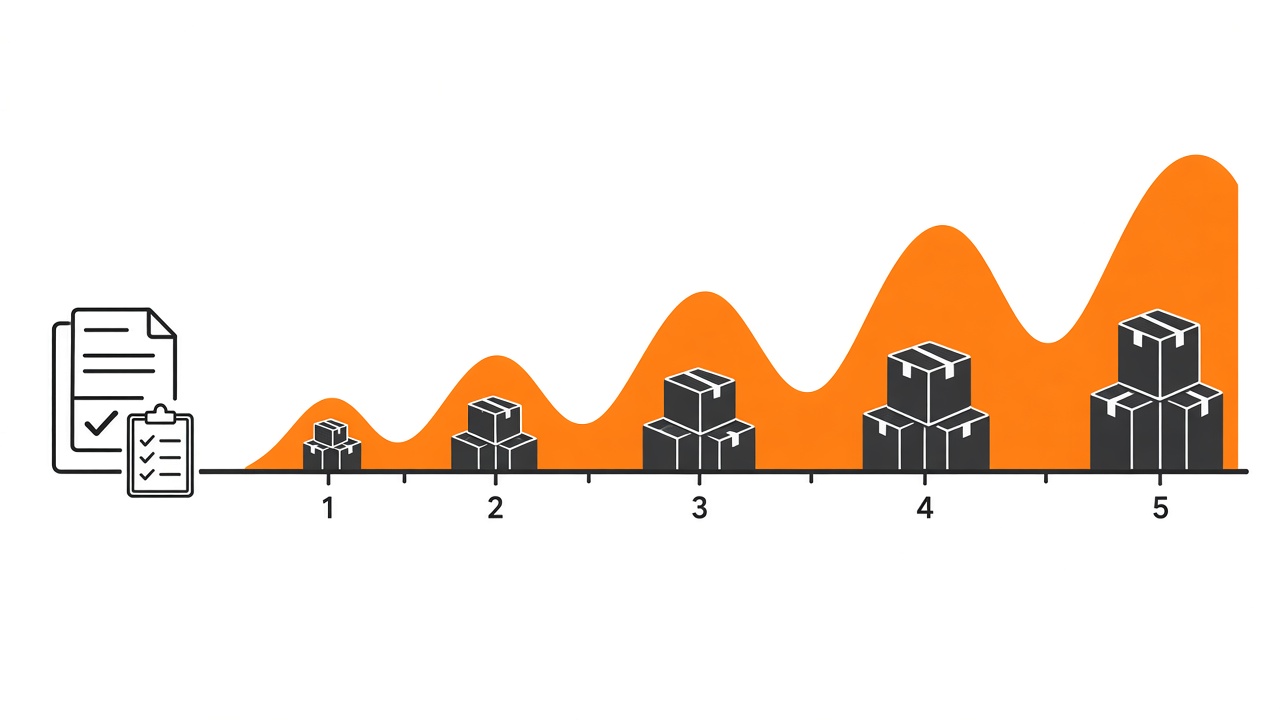
A simple planning rhythm:
A useful rule: don't raise spend on a product with fewer than 4 weeks of cover at the new forecast rate, unless a shipment is confirmed in transit.
Stockouts will still happen. The goal is to stop paying for traffic you can't convert, and protect your best campaigns while you wait.
Black Friday and Cyber Monday compress weeks of demand into a few days, and supplier lead times stretch as everyone orders at once. Plan inventory from your BFCM spend plan, not from last November's sales.
For budget and MER targets by phase, see our BFCM budget and MER targets guide for brands under $5M.
Overbuying is the quiet version of a stockout. Cash sitting in a warehouse can't fund creative or new ads. Keep it in check:
You can start with Shopify's built-in inventory reports and a spreadsheet: daily sales, lead time, safety stock, reorder point and weeks of cover per SKU. As SKU count and spend grow, a dedicated forecasting and purchasing app or your 3PL's dashboard will save time. Whatever you use, the inputs matter more than the tool: an accurate lead time, an honest daily sales number, and the ad-spend plan.
When we scale a client's paid media, we review stock and weeks of cover on the products we plan to push before we raise budgets. For Cion, that kind of full-funnel planning (structured campaigns, steady creative, and budgets increased in steps against an MER target) helped drive +90% revenue, a 4.9x ROAS and a 41% lower CPA within 90 days.
Across clients, Lion Media has managed $50M+ in ad spend at a 4.9x average ROAS, with a 5.0★ client rating. Learn more about our performance marketing agency and our Meta ads work for DTC brands.
We'll review your ad-spend plan, MER floor and stock position and show you how fast you can safely scale. Book a free growth audit with Lion Media.
A reorder point is the stock level that triggers a new purchase order. It equals average daily sales × supplier lead time in days, plus safety stock. When on-hand plus in-transit stock reaches that number, you reorder.
A simple formula is (max daily sales × max lead time) − (average daily sales × average lead time). Hold the full amount on hero SKUs that carry your ad spend, and less on slow movers or products you don't advertise.
Generally no. Avoid raising spend on a product with fewer than about 4 weeks of cover at the new forecast rate unless a shipment is confirmed. Shift spend to in-stock products instead.
Make sure your catalog sync removes the item from dynamic ads, swap the product in strong single-product ads where possible, and capture back-in-stock signups on the page. Keep the product page live with a restock date.
Plan purchase orders 8–12 weeks before Black Friday, based on your peak-week spend plan, and add extra time for freight because carriers and suppliers are busiest in the fall.
Monthly for most brands, and weekly during peak season or any month you plan a big change in ad spend.
Book a free 30-minute growth audit. We'll review your ads, tracking and site, and show you where the profit is leaking.
No commitment. No pitch deck. A real conversation about your growth architecture.