A killer offer without discounting raises perceived value instead of lowering price. Build it from a clear core outcome, then stack bundles, bonuses, a risk-reversing guarantee and honest urgency. Because the price stays intact, contribution margin and MER stay healthy while conversion rate goes up.
A discount reduces profit on every order, including orders you would have won anyway. A 20% discount on a product with 50% contribution margin removes 40% of the profit on that sale.
It also changes behavior. Customers who buy on sale learn to wait for the next one, which lowers full-price conversion over time.
Paid media makes this worse. A lower order value means a higher break-even ROAS, so campaigns that looked profitable at full price can lose money on sale. See MER vs ROAS for how to set a break-even target.
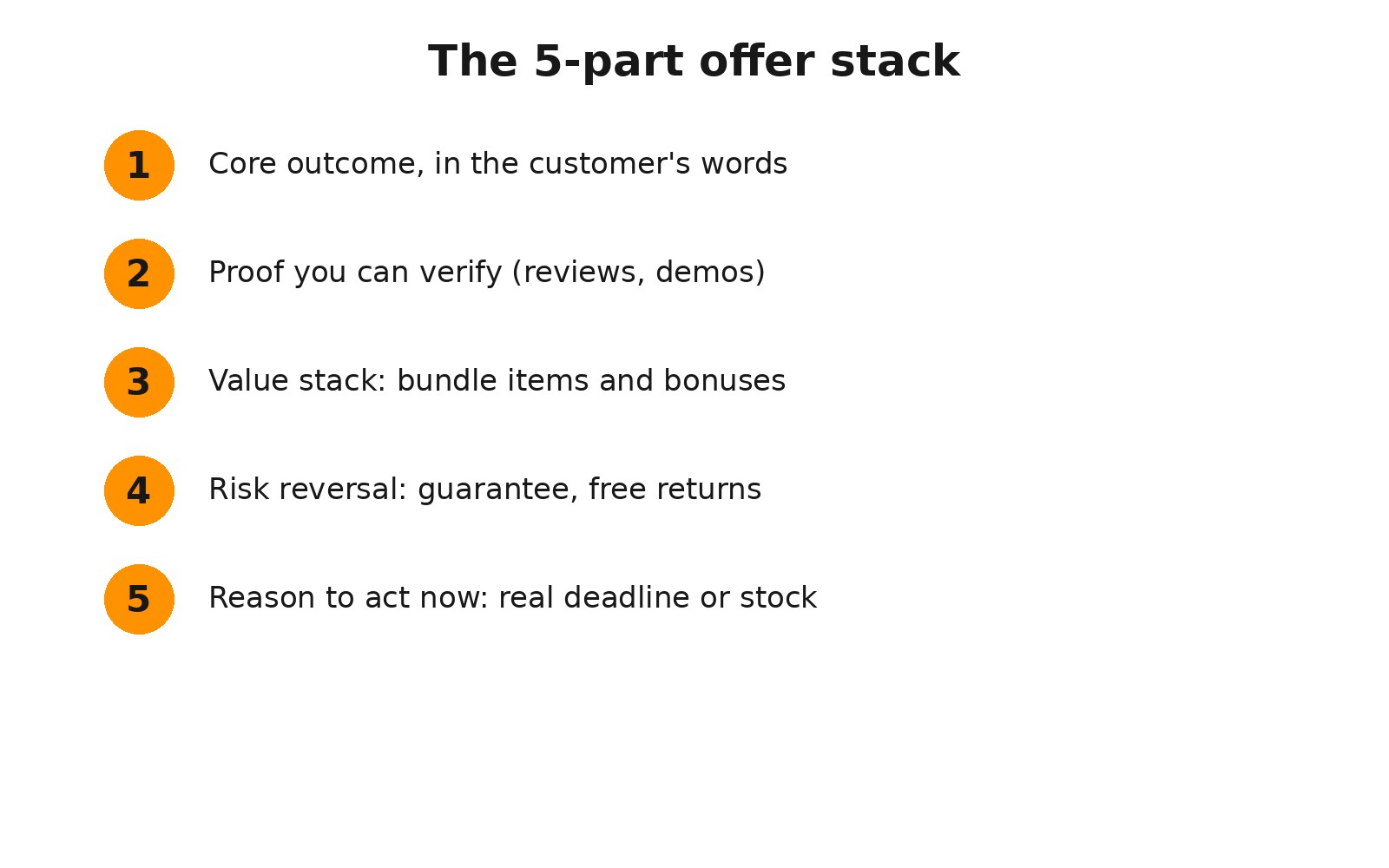
A strong offer makes the value obvious in seconds and gives a reason to act now. It has five parts:
Start with your own data before you write copy:
The objections you find become the guarantee and FAQ. The words you find become the headline.
Package items that solve a complete problem ("starter kit", "30-day routine"). Price the bundle above a single item so AOV rises, and show the combined value.
Add a low-cost, high-perceived-value item: a travel size, accessory or guide. Tie it to a threshold to lift order value.
A clear money-back or results guarantee removes the biggest objection for cold traffic. State the terms plainly.
For consumables, offer convenience (auto-ship, skip anytime) rather than a deep subscribe discount.
Limited drops, seasonal runs and gift deadlines are real reasons to act. Never invent countdown timers.
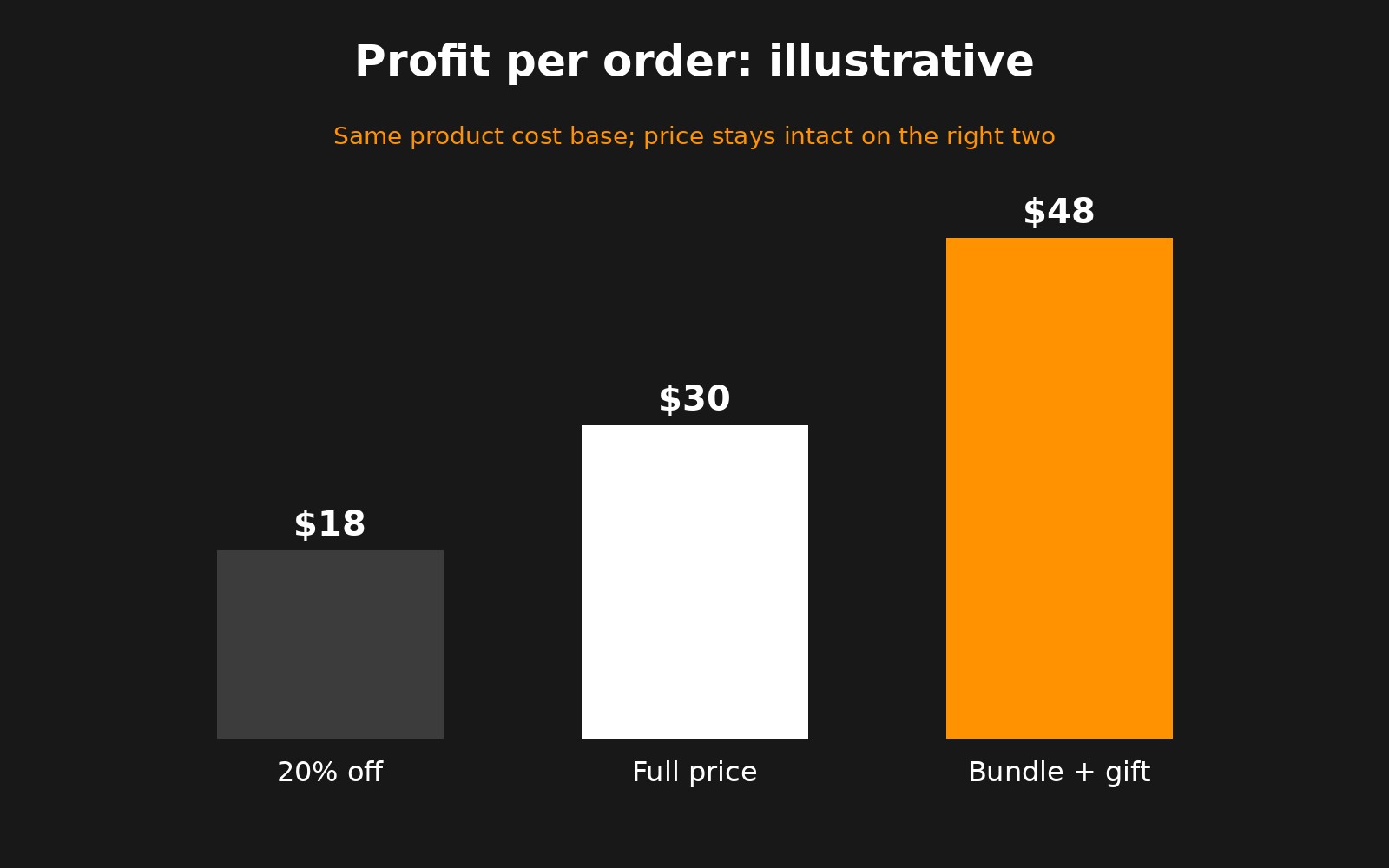
The figures below are illustrative, not client results.
| Offer | Price | Product + fulfillment cost | Profit per order |
|---|---|---|---|
| Single item, 20% off | $48 | $30 | $18 |
| Single item, full price | $60 | $30 | $30 |
| Bundle + gift, full price | $95 | $47 | $48 |
Lead with the outcome, then the stack, then the guarantee. Keep the same offer and wording from ad to landing page so cold visitors recognize it instantly.
Pair this with the product page playbook so the page converts the traffic the offer earns.
Track these for each offer variant over the same period:
Set the targets before the test: your one-page DTC growth plan turns unit economics into the MER and CAC thresholds an offer has to beat.
The winning offer is the one with the highest profit per visitor, not the most orders. Offer testing was part of the Slouper rebuild on our homepage, a "complete paid media rebuild with new creative strategy, tracking infrastructure, and offer testing that drove 4.9x ROAS in attributed revenue in 90 days."
We will review your current offer, margins and funnel and show where value can replace discounts. Book a free growth audit with Lion Media.
Yes, for planned moments like Black Friday or clearing old stock. Make it the exception, and model the break-even ROAS at the sale price first.
A bundle or gift with purchase. Both are quick to set up and usually lift order value without changing list price.
Some, but a clear guarantee usually raises conversion more than it raises refunds. Track both and compare profit per visitor.
Long enough to reach a meaningful number of purchases per variant, typically one to two weeks at steady spend.
Book a free 30-minute growth audit. We'll review your ads, tracking and site, and show you where the profit is leaking.
No commitment. No pitch deck. A real conversation about your growth architecture.