Short answer: Meta's proposed updates to its Commercial Terms, Product Catalog Terms, Self-Serve Ad Terms, and Ad Creative Generative AI Terms will not take effect on November 20, 2026. Meta paused them, the existing terms stay in force, and the company says it will come back to publishers and other stakeholders in early 2027 before anything rolls out. Separately, Shopify opened Campaign Autopilot to all merchants on October 28, 2026 — an admin tool that can build and shift paid campaigns across Meta, Microsoft Advertising, Snapchat, Shop, and Shopify Messaging from a monthly budget and guardrails.
Neither change sets your contribution margin. The pause does not reset how Meta already crawls the web, and Autopilot is not a profit system: it can spend against channel performance, in a separate Meta catalog, and in some cases go over the budget you set. This is BFCM week (Thanksgiving November 26, Black Friday November 27, Cyber Monday November 30). Do not rip up a working media plan or hand Autopilot your peak budget. Isolate any test, keep approvals on, and judge every extra dollar on blended MER and contribution margin — the same standard we use in our MER vs ROAS and Meta scaling guides.
The timeline is short and easy to scramble, so here it is from Meta's own notices and contemporaneous reporting.
In mid-October, Meta previewed updates to its commercial and advertising terms, first set to take effect on October 30, 2026. On October 23, it delayed the updated Commercial Terms and Self-Serve Ad Terms to November 20, saying it wanted more time to explain the changes, including how it uses web crawlers and that content owners could still use robots.txt (Reuters; Fast Company, quoting a Meta spokesperson).
On November 5, Meta took the preview down and posted a Business Help Center notice: the updates to those four documents "are now paused and will not take effect on November 20, 2026." Existing terms remain in effect. Crawling practices "remain unchanged," and content owners can still use robots.txt, as described in Meta's developer documentation. Nieman Lab also quoted a Meta spokesperson saying the company is pausing the changes "to get this right."
On November 18, Meta's newsroom said it halted the proposed updates "after hearing concerns from news publishers and other stakeholders about how the proposed updates apply to our web crawlers." It outlined a three-phase consultation and said that in early 2027 it expects to engage publishers, other stakeholders, and regulators on updated terms before they roll out. Meta has not set a new effective date. It says it will notify account holders ahead of any new terms, with a period of review. (Meta newsroom, November 18, 2026)
Two things in that official record matter for DTC brands. This was never only a publisher story: Meta's Commercial Terms apply to businesses using Meta's tools, so advertisers, catalog users, and anyone running a Page sit in the same contract family, and the pause covers all four documents. And a pause is not a wipe. Existing terms remain in effect, and Meta says its crawling practices have not changed. Its crawler documentation still describes separate user agents, including Meta-ExternalAds (advertising and other business products) and Meta-ExternalAgent (including training foundation AI models or indexing content). Meta explains how to allow or disallow those crawlers in robots.txt, notes that changes can take up to 24 hours because of caching, and states that FacebookExternalHit and Meta-ExternalFetcher may bypass robots.txt in some cases. If you have not reviewed that file, the pause did not do it for you.
Meta removed the preview of the paused draft, so we are not reprinting that language here.
Shopify first introduced Campaign Autopilot on June 17, 2026, as an AI marketing tool in the Shopify admin: set a budget and guardrails, approve what goes live, and let the system create and adjust campaigns. (Shopify blog)
The news that is moving now is the October 28 expansion. Shopify's changelog says Campaign Autopilot "is now available to all merchants," with more channels and SEO optimizations. You set a budget and guardrails; Autopilot looks at your store, products, and customers, builds campaigns, chooses channels, and shifts budget toward what is working. It can also suggest SEO updates for you to review and approve. The entry point is the Growth tab in Shopify admin. (Shopify changelog, October 28, 2026; Shopify Help: Autopilot)
Current official coverage includes Meta Ads (Advantage+ on Facebook and Instagram), Microsoft Advertising, Snapchat, Shop Campaigns, Shopify Messaging, X Ads through invited early access, and SEO recommendations you review before they go live. Google Ads is not on that list. If Shopping or Performance Max is part of your mix, Autopilot does not run it for you.
Shopify's requirements and considerations spell out the rules that matter this week. Autopilot is free to use; you still pay for the marketing you approve. It is available on Shopify subscription plans other than the Agentic plan. For Meta, Autopilot-managed campaigns are separate from the campaigns you already run, and they use a separate product catalog — they do not replace or merge with what you manage through the Facebook & Instagram by Meta experience. Autopilot does not change your existing manual campaigns, product prices, or store settings. SEO edits and, if you require it, new tactics wait for your approval in Pending actions. The monthly budget is a spend target, not a hard cap: Shopify says Autopilot can spend more than that target because of delayed attribution. The tool does not guarantee specific results, and it needs time to learn.
If you sell on Shopify and advertise on Meta, you now have two platform stories in the same season, and they pull in different directions.
The Meta story is contractual and unfinished. Nothing new took effect on November 20. You do not need to accept a new terms pack this week. You should still know which Meta crawlers you allow, because the current practices did not pause, and which Advantage+ and generative creative settings are on in Ads Manager, because those tools already exist under the terms that remain in force. Watch for Meta's early-2027 follow-up, with notice before any new effective date.
The Shopify story is operational and live. Autopilot can spin up a second Meta presence — a second catalog and a second set of Advantage+ campaigns — from the same store data, and move money across channels from one budget number. That is useful if you have no media team and want a tightly approved, small test. It is a problem if Autopilot competes with the Advantage+ structure you already scaled, or spends through a discount week against a ROAS target that ignores landed cost, returns, and contribution margin. When you take 20% or 25% off, break-even MER moves; we walk through that math in our BFCM budget and MER targets guide.
Our view is straightforward.
The pause is good process, not a clearance to ignore the file. Meta stepped back after publishers and other stakeholders pushed back on crawler language, and it has promised a consultation into early 2027. That is the right sequence. It does not change the ads you are running this week, and it does not mean Meta stopped accessing the web. Review robots.txt when you can do it carefully — not as a mid-BFCM emergency switch. Read the terms that are actually in force, not a screenshot of a preview that was taken down.
Campaign Autopilot is a channel operator, not a margin operator. It is built to create campaigns, allocate a budget, and shift spend toward "what's actually working" in Shopify's and the channels' performance data. That is not the same as protecting contribution margin. If you do not give Autopilot a tight budget, a target that reflects post-discount margin, and a human approval gate, you have handed it a media plan, not a guardrail.
Do not let Autopilot become a shadow account during BFCM. Shopify is explicit: Autopilot's Meta campaigns and catalog sit beside your existing ones. Two catalogs and two Advantage+ stacks, both feeding on peak demand, is how you split learning and bid against yourself. If you test it, test it as a contained line item — a small budget, approvals required, no overlap with the core Meta ads prospecting and retargeting you are already scaling.
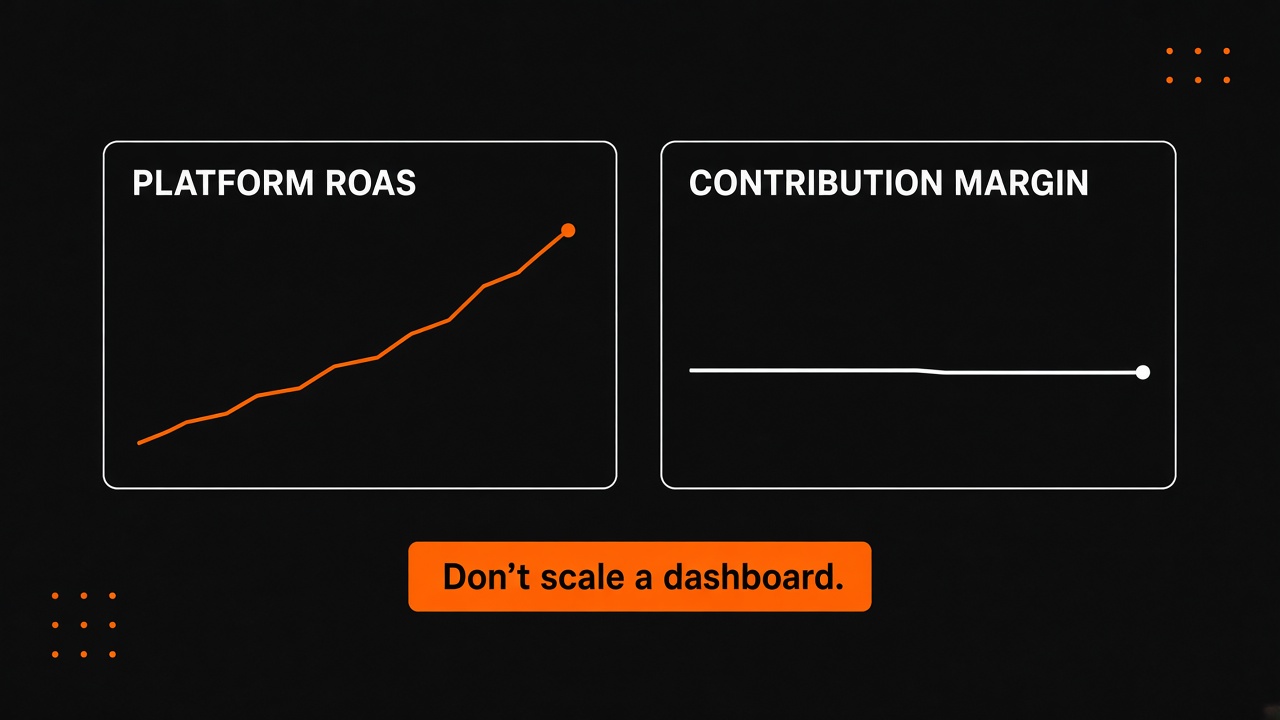
Judge the week the same way you judge the year. Blended MER is total revenue divided by total marketing spend. Contribution margin is what is left after the variable costs of the order. If Autopilot or Ads Manager shows a jump and Shopify revenue, MER, and margin do not, you are looking at a dashboard, not a business result. That is the same standard we apply when Meta ROAS looks "solid" and the brand still cannot scale. It is also how Lion Media approaches media across $50M+ in managed ad spend, a 4.9x average ROAS, and a 5.0★ Google rating — including the Slouper paid-media rebuild reported on our homepage as 4.9x ROAS in attributed revenue in 90 days, a 67% CVR improvement, and 97% revenue growth.
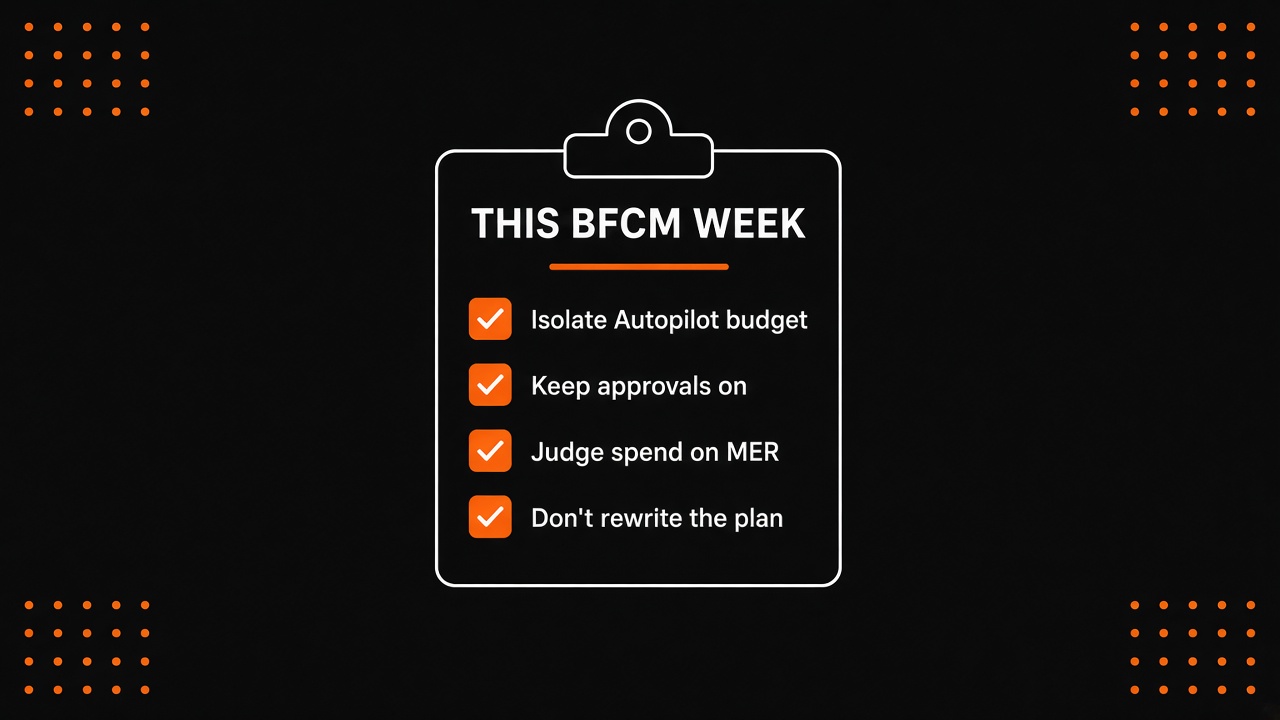
Thanksgiving is November 26, Black Friday is November 27, and Cyber Monday is November 30. This is not the week to rebuild the machine. It is the week to keep it from getting a new, unsupervised driver.
If you want a second set of eyes on the Meta account and the margin math, start with our Meta ads service for DTC brands or the scaling playbook.
No. Meta paused the updates. They will not take effect on November 20, 2026, and the existing terms remain in force until Meta sets a new date and gives account holders notice.
No. Meta says its crawling practices remain unchanged and that content owners can still use robots.txt. Review Meta's crawler documentation for the different user agents, including Meta-ExternalAds and Meta-ExternalAgent.
Meta has not set a new date. In a November 18, 2026 newsroom post, it said it expects further engagement in early 2027 before any rollout, and that it will notify account holders ahead of new terms taking effect.
It is an AI marketing tool in Shopify admin (Growth > Autopilot) that can create and manage campaigns across connected channels from a budget and guardrails, and suggest SEO updates for you to approve. Shopify opened it to all eligible merchants on October 28, 2026, after introducing it in June.
Shopify says no. Autopilot-managed Meta campaigns are separate and use a separate product catalog. They do not replace or merge with the campaigns you manage through the Facebook & Instagram by Meta experience.
Yes. Shopify describes the monthly budget as a spend target and says Autopilot can spend more than that target because of delayed attribution across connected paid channels.
Not against your core peak budget if you were not already running a controlled test. Autopilot needs time to learn, it can exceed its budget target, and its Meta campaigns sit beside your existing ones. If you test, use a small isolated budget and keep approvals on.
Book a free 30-minute growth audit. We'll review your ads, tracking and site, and show you where the profit is leaking.
No commitment. No pitch deck. A real conversation about your growth architecture.