Ecommerce SEO for DTC: How Search Drives Visibility and Purchases
By
Frank Kenne
October 27, 2026
•
5 min read
Share this post
Introduction
Short answer: Ecommerce SEO drives purchases when every page type targets the right search intent. Collection pages should rank for category terms ("women's running shoes"), product pages for specific product and modifier terms ("[brand] trail runner size 10"), and blog posts for research questions that link back into collections and products. Add a clean technical foundation and deliberate internal linking, then judge the work by organic revenue and its effect on blended MER, not traffic alone.
Key takeaways
Map every keyword to one page type by intent: blog for learning, collection for browsing, product for buying. One keyword, one URL.
Collection pages are the most underused revenue pages in DTC SEO. Give them unique copy, FAQs, and links.
Technical SEO is about letting Google crawl, render, and index your money pages, and keeping filters and variants from creating duplicates.
Internal links tell search engines which pages matter. Blog posts should push authority into collections and products.
Measure organic revenue, organic share of new customers, and the lift to blended MER. Organic sales come with no media cost.
Write for answer engines too: short answers up top, question headings, and FAQ schema help you show up in AI summaries.
Why does SEO matter for a DTC brand that already runs paid ads?
Paid social and search buy attention. SEO earns it. For a DTC brand under $5M, that difference shows up directly in your marketing efficiency ratio (MER):
MER = total revenue ÷ total ad spend
Every organic order adds revenue to the top of that equation without adding spend to the bottom. Say a brand does $300,000 a month in revenue on $100,000 of ad spend, a 3.0 MER. If SEO adds $30,000 a month in organic revenue that would not have happened otherwise, MER rises to 3.3 with no change to the ad account. That buys room to scale paid media at the same efficiency, or keep more margin.
SEO also compounds. A paid campaign stops the day you stop paying. A collection page that ranks for a high-intent term can sell for years. And searchers who type "best magnesium supplement for sleep" have already told you what they want, which usually means higher conversion rates than cold social traffic.
At Lion Media we have managed more than $50M in ad spend at a 4.9x average ROAS, and the brands that scale most smoothly almost always have an organic channel carrying part of the load. SEO is not a replacement for paid. It is what makes paid cheaper to scale.
How do you build a buyer-intent keyword map?
Most ecommerce SEO goes wrong at the keyword stage: a brand chases high-volume informational terms and wonders why traffic grows but sales don't. The fix is to map keywords by intent first, volume second.
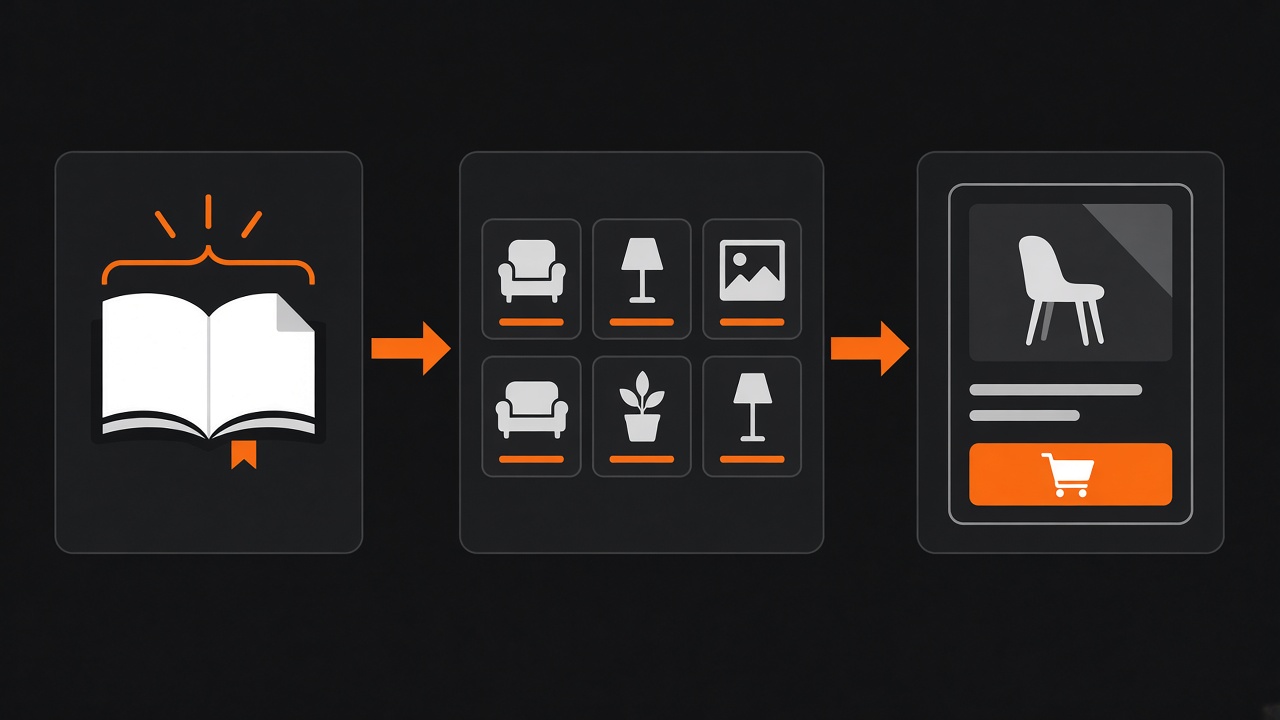
Map each keyword to one page type: learn on the blog, browse on collections, buy on product pages.
Sort every keyword into one of three buckets:
Informational (blog): "how much protein do I need after a workout," "what is a pour-over coffee ratio." The searcher is learning. Your job is to answer well and point them to the right collection.
Commercial / category (collection pages): "vegan protein powder," "organic baby swaddles," "minimalist leather wallets." The searcher wants to compare options. This is where most ecommerce revenue from SEO actually comes from.
Transactional / specific (product pages): "[your brand] chocolate protein 2 lb," "slim RFID wallet black," plus modifiers like "buy," "price," "review," or a size or flavor. The searcher is close to checkout.
A simple process that works for most catalogs:
Pull seed terms from your product names, collection names, Google Search Console queries, Amazon autocomplete, and the words customers use in reviews and support tickets.
Look at the current results page for each term. If Google shows category pages, you need a collection page. If it shows guides, you need a blog post. Google's results tell you which page type wins.
Assign one primary keyword per URL, plus a handful of close variants. If two pages target the same term, merge them or pick one. Duplicate targeting (cannibalization) splits your ranking signals.
Prioritize by revenue potential: search volume × likely conversion rate × your margin on that category. A 500-search category term that sells your best-margin product beats a 10,000-search question that sells nothing.
Keep the map in a spreadsheet with columns for keyword, intent, target URL, current rank, and next action. It becomes the source of truth for every content and technical decision that follows.
What should collection and product pages include to rank?
Collection pages are often just a product grid with a heading, which gives Google almost nothing to rank. Add:
A short intro (60–120 words) above the grid that uses the primary keyword naturally and says who the collection is for.
A longer section below the grid: buying guidance, how to choose, and 3–5 FAQs answered in 2–3 sentences each.
Links to related collections and to one or two supporting blog posts.
A unique title tag and meta description, for example "Vegan Protein Powder | Plant-Based, 25g Protein | Brand."
Product pages need unique descriptions (not the manufacturer's copy), a clear H1 with the product name, benefits, specs, and real reviews. Use Product schema with price, availability, and review ratings so you are eligible for rich results. We cover the most common problems in detail in why your product pages aren't ranking and how to fix that fast.
What belongs on an ecommerce technical SEO checklist?
Technical SEO for a store comes down to one goal: make sure Google can find, render, and index your money pages, and nothing else competes with them. Work through this checklist quarterly:
Indexing: In Search Console, check the Pages report. Every collection and active product should be indexed. Look for "Crawled – currently not indexed" on important URLs; that usually means thin or duplicate content.
XML sitemap: Include collections, products, and blog posts. Exclude filtered URLs, cart, account, and search pages. Submit it in Search Console.
Faceted navigation and filters: Color, size, and sort parameters can create thousands of near-duplicate URLs. Canonicalize them to the main collection, or block low-value combinations from crawling.
Variants: Keep product variants on one URL with a variant selector unless a variant has its own real search demand.
Canonical tags: Every page should self-canonicalize, and products reachable through multiple collection paths should point to one clean product URL.
Site speed and Core Web Vitals: Compress images, lazy-load below the fold, and cut unused apps and scripts. Speed helps rankings a little and conversion rate a lot.
Mobile experience: Most DTC traffic is mobile. Check tap targets, font sizes, and that key content is not hidden behind tabs that fail to render.
Structured data: Product, Offer, AggregateRating, BreadcrumbList, Organization, and FAQPage where it fits. Validate with Google's Rich Results Test.
Out-of-stock and discontinued products: Keep temporarily out-of-stock pages live with a back-in-stock signup. Redirect permanently discontinued products (301) to the closest product or collection.
Broken links and redirect chains: Fix 404s with real backlinks, and collapse chains so every redirect is a single hop.
How should internal linking work on an ecommerce site?
Keep the structure shallow and use blog posts to send authority into collection and product pages.
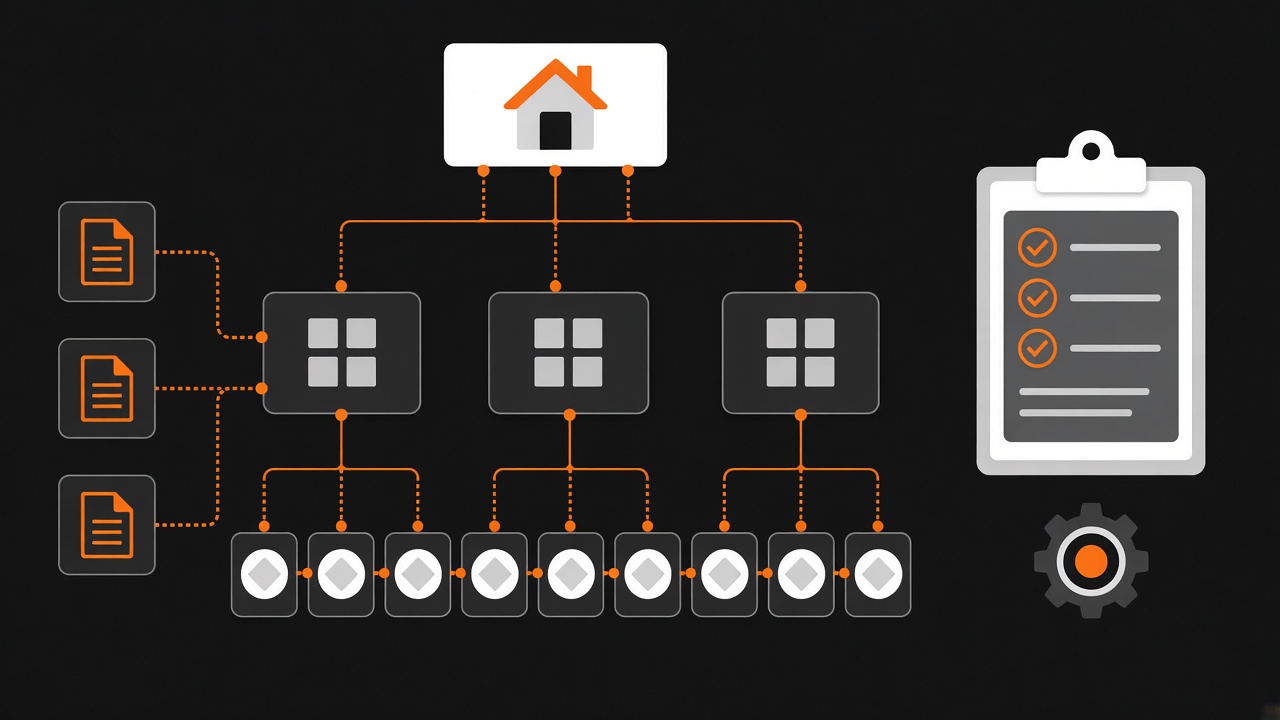
Internal links do two jobs: they help shoppers move toward a purchase, and they tell Google which pages matter most. A good structure looks like a pyramid:
Home page links to your top collections.
Collections link to their products, to sub-collections, and to closely related collections.
Products link back up to their collection (breadcrumbs) and across to complementary products.
Blog posts link into the one or two collections they support, using descriptive anchor text such as "vegan protein powder" instead of "click here."
Three rules keep it effective. First, every important page should be reachable within three clicks of the home page. Second, no money page should be an orphan with zero internal links. Third, when you publish a new post, go back and add links to it from two or three existing related posts, so it is discovered quickly.
This is the hub-and-spoke model: one pillar page (like this one) covers the topic broadly and links to deeper spokes, and each spoke links back. It concentrates topical authority instead of scattering it.
How do you measure organic revenue and its MER contribution?
Rankings and traffic are leading indicators. Revenue is the result. Track these monthly:
Organic revenue and orders in GA4 (session default channel group = Organic Search), plus Shopify's own channel reports as a cross-check.
Organic conversion rate by landing page type. Collections and products should convert far better than blog posts; if not, the intent mapping is off.
Non-branded clicks in Search Console. Branded search mostly reflects paid and word of mouth. Non-branded growth is what SEO actually created.
New-customer share from organic, so you know SEO is acquiring customers, not just capturing people who would have bought anyway.
Blended MER, with and without organic. Compute MER on total revenue, then on revenue minus non-branded organic. The gap is roughly the efficiency SEO is adding.
A worked example: a brand spends $60,000 a month on ads and does $210,000 in total revenue, a 3.5 MER. Non-branded organic contributes $24,000. Without it, MER would be about 3.1. That 0.4-point gap is the value of the SEO program, and it should grow every quarter as more category pages rank.
Give SEO realistic time. Technical fixes and title rewrites can move numbers within weeks. Competitive category terms usually take three to six months or longer.
How do you optimize ecommerce content for AI answers (AEO and GEO)?
More shoppers now get answers from Google's AI Overviews, ChatGPT, Perplexity, and similar tools. Answer engine optimization (AEO) and generative engine optimization (GEO) are about being the source those tools quote. The good news is that it overlaps heavily with good SEO:
Lead with a short answer. Put a direct 2–4 sentence answer at the top of posts and collection guides, like the one at the top of this article.
Use question-style headings. H2s phrased as real questions match how people prompt AI tools.
Add FAQ sections and FAQPage schema. Concise question-and-answer pairs are easy to extract and cite.
Be specific and consistent. Clear product facts (ingredients, sizes, materials, prices) and consistent brand info across your site, Google Business Profile, and marketplaces help AI systems trust what they summarize.
Earn mentions. Reviews, roundups, and press that name your brand in a category are a strong signal for generative answers.
Keep content crawlable. Important copy should be in the HTML, not loaded only by scripts or hidden in images.
Weeks 3–4: Keyword map. Build the intent map and assign a primary keyword to every collection and top product.
Weeks 5–8: Money pages. Rewrite titles, metas, and intros on your top 10 collections; add FAQs and schema; improve your top 20 product descriptions.
Weeks 9–12: Content and links. Publish supporting blog posts for your highest-margin categories, link them into collections, and start earning mentions and reviews.
Review the scorecard monthly and reinvest in what moves organic revenue. For the brands we work with, including Cion, PIPWellness, Honey Drop, and Slouper, the goal is always the same: grow total revenue faster than total spend.
Need help building organic revenue?
Lion Media is a Chicago-based DTC performance agency rated 5.0★ by clients. We plan SEO around the same profit metrics as paid media. See our ecommerce SEO services to learn how we build keyword maps, fix technical issues, and turn search traffic into revenue.
FAQ
How long does ecommerce SEO take to work?
Technical fixes and title or meta rewrites can show results in a few weeks. Ranking for competitive category terms usually takes three to six months or more, depending on your site's authority and competition.
Should collection pages or product pages be the SEO priority?
Start with collection pages. They target broader commercial terms with more search volume, and they link down to products. Then improve your best-selling and highest-margin product pages.
Is blogging worth it for an ecommerce store?
Yes, if posts answer real buyer questions and link into the collections and products they support. Blog posts that never link to anything you sell rarely drive revenue.
How do I measure whether SEO is actually making money?
Track organic revenue and orders in GA4 and Shopify, non-branded clicks in Search Console, and blended MER with and without organic revenue. The gap shows how much efficiency SEO adds.
What is the most common ecommerce SEO mistake?
Thin collection pages with no unique copy, combined with filter and variant URLs that create duplicate content. Both make it hard for Google to know which page to rank.
Does SEO help with AI search results?
Yes. Short direct answers, question headings, FAQ schema, accurate product facts, and brand mentions across the web all make your pages more likely to be cited in AI answers.
Ready to Build?
Want this applied to your brand?
Book a free 30-minute growth audit. We'll review your ads, tracking and site, and show you where the profit is leaking.
No commitment. No pitch deck. A real conversation about your growth architecture.
Written by Frank Kenne, Lion Media
Lion Media is a performance marketing agency for DTC ecommerce brands. We build paid media and growth systems around MER and contribution margin, not platform ROAS.