Growth-stage brands scale ad spend before defining contribution targets, creative testing velocity, or unified attribution. The result is unstable CAC, inconsistent ROAS, and reactive optimization. We engineer paid media systems around financial constraints first: campaign structure, bidding, creative iteration, audience segmentation, and measurement all aligned to margin thresholds. From Meta to Google to TikTok, every channel operates within defined acquisition targets, not platform defaults.





Trusted by 60+ growth-stage brands
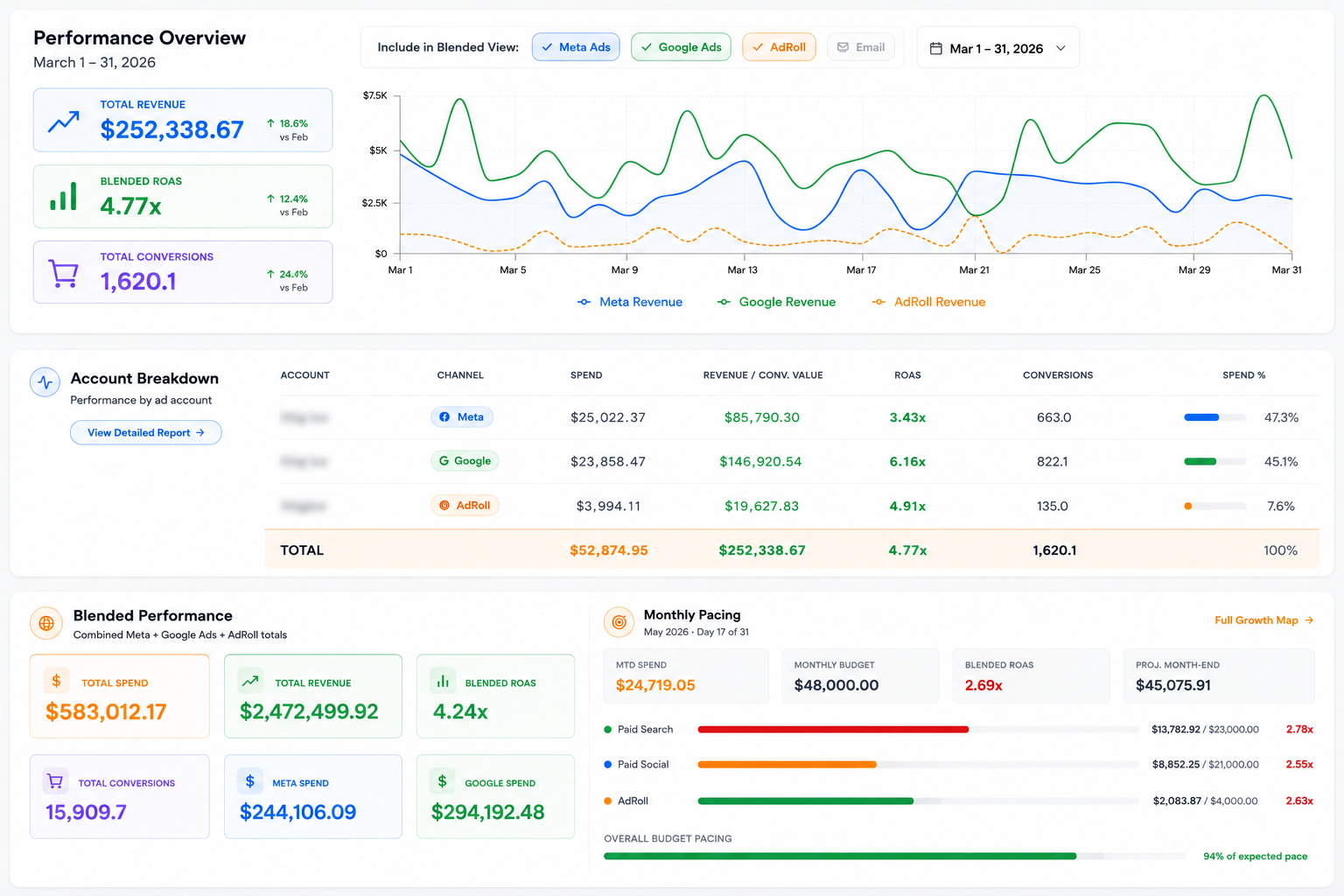
Scaling profitably requires more than campaign management. Our paid media scope covers the full performance lifecycle from financial modeling to creative testing to contribution-focused reporting. We define allowable CAC and breakeven ROAS before scaling spend. Campaign structures are built around product economics, audience intent, and margin thresholds. Creative testing is structured, not random. Budget allocation is adjusted based on contribution impact, not platform-reported metrics alone. Paid media operates within a controlled system designed to reduce volatility and protect profitability.



Most paid media inefficiency comes from three breakdowns: poor financial alignment, unstructured creative testing, and fragmented attribution. We engineer control into the system. Campaign budgets are set against defined CAC and contribution targets. Cost caps align with margin realities, not growth pressure. Creative is tested through controlled iterations tied to measurable signals. Attribution is centralized so Meta, Google, and TikTok performance get evaluated together. The objective is not higher spend. It is stable acquisition economics that enable confident scaling.



Effective paid media management requires more than platform familiarity. It demands financial discipline, structured testing, and consistent execution against defined performance targets. Our team has managed over $50M in cumulative ad spend across DTC brands and growth stages. That experience informs how we structure campaigns, allocate budgets, and identify inefficiencies before they compound.
Start with a Free Audit →



Paid media experimentation gets inefficient when it is reactive or inconsistent. We operate inside a structured testing framework designed to accelerate learning without sacrificing margin. Creative, segmentation, bidding, and funnel alignment are tested against defined hypotheses with clear success thresholds. Experiments are prioritized by financial impact, not platform trends. Each test has a controlled timeline, evaluation criteria, and a documented outcome.

Paid media campaigns often become inefficient when brands scale spend without defined CAC targets, structured creative testing, or unified attribution. Without operational controls, acquisition costs rise while profitability becomes unstable.
Our paid media services include Meta Ads, Google Ads, TikTok Ads, and strategic advisory support. Campaigns are managed through a unified system focused on contribution margin and acquisition efficiency.
We evaluate performance using contribution impact, CAC stability, revenue efficiency, and margin alignment. Platform-reported metrics alone do not determine optimization decisions or scaling recommendations.
Creative testing follows structured frameworks with defined hypotheses, timelines, and evaluation criteria. Testing focuses on measurable financial impact rather than random experimentation or trend-driven changes.
Our approach prioritizes financial modeling, structured testing, and attribution alignment before scaling budgets. Instead of optimizing for vanity metrics, we optimize for stable acquisition economics and profitability control.
Yes. We evaluate existing campaign structures, bidding strategies, creative performance, and attribution systems to identify inefficiencies and opportunities for improvement before recommending changes.
A paid media audit reviews campaign structure, CAC alignment, bidding systems, creative testing processes, attribution visibility, and budget allocation. The objective is to identify operational inefficiencies impacting scalable profitability.
.png)